
grey SS4A logo with each letter positioned in a quadrant of a divided box 

Get Inspired by Real Action Plans

Filter Results by Agency Types:
Filter by Rural/Urban
Town of Bennett

Town of Bennett Comprehensive Safety Action Plan

Bennett, Colorado | Rural | City/Township | FY22 | Award: $100,000.00 | Planning Grant

Montrose County

Montrose County SS4A Action Plan

Montrose, Colorado | Rural | County | FY22 | Award: $400,000.00 | Planning Grant

Larimer County

Larimer County Comprehensive Safety Action Plan

Fort Collins, Colorado | Urban | County | FY22 | Award: $240,000.00 | Planning Grant

City of Rifle

Safe Streets for Rifle Plan

Rifle, Colorado | Rural | City/Township | FY23 | Award: $120,000.00 | Planning Grant

City of Glenwood Springs

Glenwood Springs Comprehensive Safety Action Plan

Glenwood Springs, Colorado | Rural | City/Township | FY22 | Award: $480,000.00 | Planning Grant

City of Centennial

City of Centennial Safety Action Plan

Centennial, Colorado | Urban | City/Township | FY22 | Award: $220,000.00 | Planning Grant
Comprehensive Safety Action Plans 

What are Comprehensive Safety Action Plans?

In the Safe Streets and Roads for All (SS4A) grant program, Comprehensive Safety Action Plans (referred to as “Action Plans”) are the basic building blocks to significantly improve roadway safety. It supports the implementation of projects and strategies that will help achieve local, data-driven transportation safety goals.

What is the goal of an Action Plan?

The goal of an Action Plan is to develop a holistic, well-defined strategy to prevent roadway fatalities and serious injuries in a locality, region, or on Tribal Lands.

What do Action Plans Include?

A successful Action Plan includes seven key components:

  1. Leadership commitment and goal setting
  2. Planning structure
  3. Safety analysis
  4. Engagement and collaboration
  5. Policy and process changes
  6. Strategy and project selections
  7. Progress and transparency

To learn more about each component, check out the U.S. Department of Transportation Comprehensive Safety Action Plan webpage.

Action Plans 101

Use the lesson to learn the fundamentals. Then complete the activity to put your knowledge into practice and demonstrate your understanding.

1 Build your Action Plan with the Safe System Approach

Review the lesson and learn how Action Plans and the Safe System Approach work together to shape meaningful change for roadway safety.

After reviewing the lesson, you will be able to:

  • Define the Safe System Approach, Action Plan, and guiding principles
  • Explain how the Safe System Approach, Action Plan, and guiding principles work together
2 Define Your Guiding Principles

Complete the activity to develop your community’s guiding principles, the compass that will help make your Action Plan intentional, strategic, and rooted in what matters most to your community.

Browse the activity pages to the right, or download the PDF below.

Technical Assistance Center (TAC) Talks

Safe System Approach

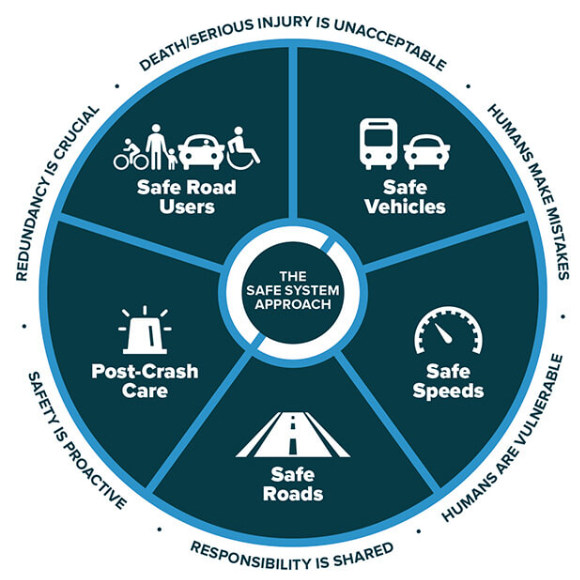
The Safe System Approach has been embraced by the transportation community as an effective way to address and mitigate the risks inherent in our enormous and complex transportation system. It works by building and reinforcing multiple layers of protection to both prevent crashes from happening in the first place and minimize the harm caused to those involved when crashes do occur. It is a holistic and comprehensive approach that provides a guiding framework to make places safer for people.

This approach involves a paradigm shift to improve safety culture, increase collaboration across all safety stakeholders, and refocus transportation system design and operation on anticipating human mistakes and lessening impact forces to reduce crash severity and save lives.

The Safe System Approach and Action Plans work together to help communities move from vision to action when improving safety of all road users.

Here’s what you need to know to bring the Safe System approach to your community.

The Safe System Approach

The objective of a Safe System Approach is to avoid serious crashes from happening in the first place, but if they do occur, to reduce the severity of conflicts between vehicles and road users and reduce impact forces so that collisions are never deadly.
It works by creating redundancy so that when something goes wrong in the system, there are backups in place to keep people from serious harm.
Click on each tab to learn more about the Safe System Approach, its key principles, objectives, and its connection to Action Plans.
Safe System Approach elements diagram
Safe System Approach Diagram

Additional Resources

Explore additional tools and insights to support your journey in developing an Action Plan.
Safe System Approach Video
The video provides an overview of the philosophy behind the Safe System Approach and uses a scenario that illustrates opportunities to save lives when the Safe System Approach is implemented.  
Safe System Roadway Design Hierarchy
This document is a tool that characterizes engineering and infrastructure-based countermeasures and strategies relative to their alignment with the Safe System Approach, toward the goal of eliminating traffic-related fatalities and serious injuries.  
FHWA Safe System Approach Overview
This resource provides an overview of the Safe System Approach, emphasizing its critical role in improving roadway safety. It explains the core principles and objectives of the approach and illustrates how it fundamentally differs from traditional road safety practices.  
Community of Practice: Safe System Approach
This webinar provides an in-depth review of the Safe System Approach and discusses how SS4A grant recipients can use it to maximize the benefits of their projects.  
Leadership Commitment and Goal Setting

What is Leadership Commitment and Goal Setting?

Leadership commitment and goal setting is an official public commitment (e.g., resolution, memorandum, or other commitment) by a leader OR a local, regional, or metropolitan planning organization (MPO) policy board to an eventual goal of zero roadway fatalities and serious injuries.

The commitment must include a goal and timeline for eliminating roadway fatalities and serious injuries through one, or both, of the following:

  1. The target date for achieving zero roadway fatalities and serious injuries, or
  2. A percentage reduction of roadway fatalities and serious injuries by a specific date with an eventual goal of zero roadway fatalities and serious injuries.

What is the goal of Leadership Commitment and Goal Setting?

The goal of leadership commitment and goal setting is to secure visible, sustained support from community leadership and to set clear, measurable goals that drive the Action Plan forward. It signals that roadway safety is a top priority championed by leadership and is designed for long-term impact.

Leadership Commitment and Goal Setting 101

Use the lesson to learn the fundamentals. Then complete the activity to put your knowledge into practice and demonstrate your understanding.

1 Understanding Leadership Commitment and Goal Setting

Review the lesson and learn how to build trusted relationships with community leaders, secure their commitment, and set goals that carry momentum forward.

After reviewing the lesson, you'll be able to:

  • Identify key leaders who can support your Action Plan
  • Develop and present your “ask” to leadership
  • Identify the types of documents or methods that can formalize leadership commitment
  • Publicize and promote your leadership commitment
2 Develop your SS4A Elevator Pitch

Complete the activity to craft a compelling elevator pitch that will inspire, inform, and connect with any audience, whether you’re speaking to local officials, community partners, or the public.

Browse the activity pages to the right, or download the PDF below.

Technical Assistance Center (TAC) Talks

Noteworthy Practices from the Field

Gathered from completed SS4A Action Plans, these noteworthy practices helped grant recipients set goals and secure strong leadership commitments:

Engage Leadership Early and Often

Early and visible support from leadership, through announcements, public letters, or personal messages establish credibility, accountability, and long-term momentum.

Tailor Messages and Communication

Adapt communication styles and formats to suit different audiences help make roadway safety challenges resonate and persuasive.

Position Leadership as a Strategic Driver

Empower leaders to shape the plan, foster collaboration, and lead public messaging.

Establish Accountability and Celebrate Progress

Track milestones, share results, and publicly acknowledge achievements with leadership to reinforce commitment and build long-term buy in.

Codify Commitments Through Policy

Use local resolutions, ordinances, or similar mechanisms to formalize safety commitments.

Want to see examples of these strategies in action? Explore real-world examples in our Get Inspired by Real Action Plans tab.

Additional Resources

Explore additional tools and insights to support your journey in developing an Action Plan.
Peer Exchange: Your Comprehensive Safety Action Plan and Leadership Commitment
This document captures key takeaways from an SS4A Peer Exchange and outlines proven strategies for securing leadership commitment and sustaining engagement.
Safety Performance Management Target Setting Communication Plan and Toolkit
This guide helps State DOTs and MPOs explain why safety performance targets are set, who's impacted, and how stakeholders can support target development and achievement.
Planning Structure

What is a Planning Structure?

A planning structure is a committee, task force, implementation group, or similar body responsible for overseeing the development, implementation, and monitoring of an Action Plan.

What is the goal of a Planning Structure?

The goal of a planning structure is to establish a clear and coordinated framework that guides the development, implementation, and monitoring of safety strategies. This structure helps align actions with the community's safety vision while promoting efficiency, collaboration, and accountability.

Planning Structure 101

Use the lesson to learn the fundamentals. Then complete the activity to put your knowledge into practice and demonstrate your understanding.

1 Understanding Planning Structure

Review the lesson and learn how to assemble and activate a planning structure that keeps your Action Plan organized, collaborative, and moving forward.

After reviewing the lesson, you will be able to:

  • Identify who should be part of your planning structure
  • Empower your planning structure to drive progress
2 Building an Action Plan Task Force

Complete the activity to begin drafting a plan to form a task force in your community that brings together individuals with diverse perspectives and expertise in roadway safety.

Browse the activity pages or download the PDF below.

Technical Assistance Center (TAC) Talks

Noteworthy Practices from the Field

Gathered from completed SS4A Action Plans, these noteworthy practices helped grant recipients create and sustain an effective planning structure:

Engage a Wide Range of Stakeholders

Strengthen your team by including a wide range of voices such as transportation, emergency services, engineers, public health, Tribal communities, and community groups. A broad coalition brings trusted, valuable perspectives that represent the community's needs.

Use a Structured, Phased Planning Process

Organize planning into clear stages, such as setting goals, reviewing data, developing strategies, and prioritizing projects to keep your team aligned and intentional. Consider setting a "curriculum" to walk through each Action Plan component, using each phase to gather input and guide discussion.

Maintain Engagement by Setting an Intentional Cadence

Establish purposeful check-ins aligned with key milestones and your community's planning needs. Share updates regularly to sustain momentum and accountability.

Coordinate Across Jurisdictions for Unified Planning

Align city, county, and regional efforts to reduce duplication and ensure consistent goals and implementation strategies.

Identify Efforts Beyond the Action Plan

Look for tasks or initiatives outside SS4A planning that can amplify impact and build long-term trust with your community.

Want to see examples of these strategies in action? Explore real-world examples in our Get Inspired by Real Action Plans tab.

Additional Resources

Explore additional tools and insights to support your journey in developing an Action Plan.
Building Links to Improve Safety: How Safety and Transportation Planning Practitioners Work Together
This guide provides State DOTs, FHWA, MPOs, and local and Tribal agencies with strategies to integrate safety into every phase of transportation planning, aiming to reduce the impacts of serious crashes through early and effective planning.  
Safety Planning Process Partners and Leaders
This webpage provides a step-by-step framework for MPOs and local communities to develop implementable safety plans that align with both community needs and State safety priorities. It builds on six foundational steps and offers customized guidance for different agency types.  
Improving Safety through Coordination
This resource discusses various methods and practices for integrating safety and transportation planning processes to produce safer roadways for all road users.  
Know Your Agency's Level of Road Safety Culture
This guide helps agencies assess and strengthen their road safety culture by exploring how safety is prioritized across decision-making, operations, and design.  
Safety Analysis

What is Safety Analysis?

Safety analysis is the examination of existing conditions and historical trends to establish a baseline of crashes involving fatalities and serious injuries across a jurisdiction, locality, Tribe, or region. It includes an analysis of locations where there are crashes and the severity of the crashes, as well as contributing factors and crash types by relevant road users (e.g., motorists, pedestrians, transit users).

What is the goal of Safety Analysis?

The goal of safety analysis is to identify patterns and contributing factors behind roadway fatalities and injuries. These insights inform targeted safety strategies and guide investments aimed at reducing serious crashes.

Safety Analysis 101

Use the lesson to learn the fundamentals. Then complete the activity to put your knowledge into practice and demonstrate your understanding.

1 Understanding Safety Analysis

Review the lesson and learn how to understand your community's characteristics, conditions, and safety landscape, so you can identify risks and turn insights into action.

After reviewing the lesson, you will be able to:

  • Find data sources to identify trends and high-risk locations
  • Use data to screen locations and prioritize needs
  • Integrate actionable findings into your Action Plan
2 Safety Data Analysis and Prioritization

Complete the activity to kick off your safety analysis by identifying priority crash types affecting your community and considering different approaches to address them.

Browse the activity pages or download the PDF below.

Technical Assistance Center (TAC) Talks

Noteworthy Practices from the Field

Gathered from completed SS4A Action Plans, these noteworthy practices reveal what it takes to understand crash patterns, prioritize risks, and drive impactful, data-informed decisions that make roads safer for everyone:

Start with Local and Publicly Available Data

Begin your planning process by tapping into free and accessible data sources. These may include local crash reports, State DOT databases, and Emergency Services data. Using these resources first will help ground your recommendations in real-world conditions while avoiding high costs. As your analysis evolves, you can supplement with community feedback and/or paid datasets, if needed.

Adapt to Data Gaps with Custom Approaches

When data is limited or inconsistent, develop tailored methodologies, such as proxy indicators, observational studies, or stakeholder input, to work around limitations and still produce meaningful insights.

Focus Where It Counts

Let crash patterns and risk mapping lead the way. Prioritize high-impact areas and crash types to ensure your resources go where they'll have the greatest effect.

Validate Data with Ground-Level Knowledge

Incorporate lived experiences, local observations, and stakeholder feedback from the community to enrich data insights, ensuring the analysis reflects real-world conditions and community needs.

Apply the Systemic, Systematic, and/or Site-Specific Analysis Approach

Select one or more methods that best fit your jurisdiction's context and needs to guide effective safety analysis.

Consider Safety for All Road Users

Ensure your analysis accounts for both motorized and non-motorized users to reflect the full range of travel behaviors and roadway needs.

Want to see examples of these strategies in action? Explore real-world examples in our Get Inspired by Real Action Plans tab.

Additional Resources

Explore additional tools and insights to support your journey in developing an Action Plan.
Three Approaches to Address Severe Roadway Crashes
This video breaks down the differences between the site-specific, systematic, and systemic approaches to address crashes and risks on your roadway network.  
Systemic Approach to Safety
This webpage explains how the systemic approach supports agencies in proactively identifying and reducing roadway safety risks. It outlines a six‑step process of applying the systemic approach, highlights real‑world examples, and provides links to additional resources to help agencies apply proactive, data‑driven safety strategies.  
Data-Driven Safety Analysis (DDSA)
This webpage introduces Data-Driven Safety Analysis (DDSA) as a powerful planning tool that helps agencies forecast crash risk, identify high-risk locations, and prioritize safety investments using predictive and systemic methods. It provides an overview, information on benefits, and additional resources you can access to learn more.  
Engagement and Collaboration

What is Engagement and Collaboration?

Engagement and collaboration involves robust engagement with relevant stakeholders, including the private sector and community groups, that allows for both community representation and feedback. Information received from engagement and collaboration is analyzed and incorporated into the Action Plan.

What is the goal of Engagement and Collaboration?

The goal of engagement and collaboration is to involve diverse stakeholders and the community in a meaningful way to gather input, build shared understanding, and create an Action Plan that reflects broad perspectives and needs.

Engagement and Collaboration 101

Use the lesson to learn the fundamentals. Then complete the activity to put your knowledge into practice and demonstrate your understanding.

1 Understanding Engagement and Collaboration

Review the lesson and learn how to identify stakeholders in your community that should be involved in the Action Plan process and how to collaborate with those stakeholders to gather meaningful insights.

After reviewing the lesson, you will be able to:

  • Identify communities to engage with in the Action Plan development process
  • Build long-term relationships with stakeholders
  • Continue engaging community members throughout the Action Planning process
2 Engaging Stakeholders

Complete the activity to identify key stakeholders in your community, highlight their strengths, and explore meaningful ways to engage them.

Browse the activity pages or download the PDF below.

Technical Assistance Center (TAC) Talks

Noteworthy Practices from the Field

Gathered from completed SS4A Action Plans, these noteworthy practices helped grant recipients maintain strong engagement and collaboration with their community stakeholders:

Use Multi-Channel Outreach to Expand Reach

Use a variety of outreach methods, including a mix of digital, paper-based, and in-person methods to connect with residents across age groups, access levels, and comfort zones.

Meet People Where They Already Are

Hold conversations in familiar community spaces like senior centers, food pantries, and libraries or host pop-up events at well-attended local gatherings and events to increase accessibility and build trust.

Engage Community Groups to Expand Access

Partner with local organizations to reach populations often overlooked in planning and build credibility through trusted messengers.

Let Community Feedback Shape Final Priorities

Use public input to shift focus from initial assumptions to issues that matter most to residents, grounding final plan recommendations in both community concerns and lived user experience for stronger alignment with local needs.

Want to see examples of these strategies in action? Explore real-world examples in our Get Inspired by Real Action Plans tab.

Additional Resources

Explore additional tools and insights to support your journey in developing an Action Plan.
Safety Culture
This resource defines safety culture as the shared values and behaviors that prioritize safety across agencies and communities. It supports collaboration by aligning teams and partners around a common safety mindset, essential for engagement and implementing the Safe System Approach.
Community of Practice (CoP) Peer Exchange: Comprehensive Safety Action Plans and Your Safety Story
This webinar highlights Greensboro MPO's journey in developing their Action Plan, showcasing the strategies they used to connect with their community and engage stakeholders in meaningful, accessible ways.
National Highway Traffic Safety Administration (NHTSA) Traffic Safety Marketing
This database offers a wide range of communication resources across various traffic safety topics. It's designed to support States, partner organizations, and highway safety professionals in developing effective outreach strategies and campaigns.
Community Connections Public Involvement Strategies
This tool offers practical strategies and resources for engaging communities in transportation planning and project development.
Promising Practices for Meaningful Public Involvement in Transportation Decision-Making
The Promising Practices for Meaningful Public Involvement in Transportation Decision-Making guide contains practices that can help funding recipients meet requirements for meaningful public involvement and participation.
Policy and Process Change

What is Policy and Process Change?

Policy and process change involves reviewing existing policies, plans, guidelines, and standards to identify opportunities to better prioritize transportation safety.

What is the goal of Policy and Process Change?

The goal of policy and process change is to assess current policies and procedures and plan for updates that will help your community better prioritize transportation safety and align with long-term safety goals.

Policy and Process Change 101

Use the lesson to learn the fundamentals. Then complete the activity to put your knowledge into practice and demonstrate your understanding.

1 Understanding Policy and Process Change

Review the lesson and learn how to analyze your community's current policies and identify opportunities for change.

After reviewing the lesson, you will be able to:

  • Identify which types of policies or processes to review
  • Find opportunities for policy or process updates
  • Evaluate a policy or process for potential change
2 Sample Policy Review

Complete the activity to practice evaluating a transportation safety policy by annotating observations, suggesting improvements, and identifying local policies that may need review.

Browse the activity pages or download the PDF below.

Technical Assistance Center (TAC) Talks

Noteworthy Practices from the Field

Gathered from completed SS4A Action Plans, these noteworthy practices helped grant recipients drive lasting policy and process change:

Align Safety Goals Across Plans and Departments

Coordinate local, regional, and departmental plans to embed safety priorities into broader transportation, land use, and infrastructure strategies.

Integrate Safety into Standards and Procedures

Update development codes, engineering standards, and zoning regulations to make safety a core part of project design and approval processes.

Conduct Policy Gap Analysis to Strengthen Safety Support

Compile and assess existing planning documents to identify where new or revised policies are needed to better advance safety goals.

Balance Immediate Action with Long-Term Change

Use an action-oriented timeline that balances short-, medium-, and long-term strategies to balance immediate progress while driving long-term improvements.

Ground your Policies and Processes in your Community's Guiding Principles

Align safety policies with your guiding principles to ensure consistent, goal-driven decisions across your Action Plan.

Educate Community Leaders on Safety

Use the planning and policy development process as an opportunity to inform and engage elected officials, department heads, and other community leaders about the importance of safety and to build support for long-term improvements.

Want to see examples of these strategies in action? Explore real-world examples in our Get Inspired by Real Action Plans tab.

Additional Resources

Explore additional tools and insights to support your journey in developing an Action Plan.
Safe System Policy-based Alignment Framework
The tool helps agencies assess policies and safety planning documents in a holistic manner through a Safe System lens.  
Building Links to Improve Safety: How Safety and Transportation Planning Practitioners Work Together
This guide provides State DOTs, FHWA, MPOs, and local and Tribal agencies with strategies to integrate safety into every phase of transportation planning, aiming to reduce the impacts of serious crashes through early and effective planning.  
Strategy and Project Selections

What is Strategy and Project Selections?

Strategy and project selections is the identification of a comprehensive set of projects and strategies, shaped by data, the best available evidence, noteworthy practices, and stakeholder input that will address the safety problems described in the Action Plan. These strategies and countermeasures focus on a Safe System Approach and effective interventions and consider multidisciplinary activities.

What is the goal of Strategy and Project Selections?

The goal of strategy and project selection is to create a prioritized list of data-driven, evidence-based strategies and projects that address safety issues in the Action Plan and to provide clear time ranges for when the strategies and countermeasures are expected to be deployed.

Strategy and Project Selections 101

Use the lesson to learn the fundamentals. Then complete the activity to put your knowledge into practice and demonstrate your understanding.

1 Understanding Strategy and Project Selections

Review the lesson and learn how to turn safety goals into concrete strategies and projects by connecting your Action Plan findings into real-world improvements.

After reviewing the lesson, you will be able to:

  • Identify safety improvements you can make
  • Select and prioritize projects that address your safety challenges
  • Engage stakeholders throughout the strategy and project selection process
2 Reviewing and Discussing Strategy and Project Selections

Complete the activity to evaluate your community's policies and projects, identify high-impact strategies, and outline next steps for stronger alignment with your Action Plan.

Browse the activity pages or download the PDF below.

Technical Assistance Center (TAC) Talks

Noteworthy Practices from the Field

Gathered from completed SS4A Action Plans, these noteworthy practices helped grant recipients select meaningful strategies and projects to improve roadway safety:

Prioritize with Purpose

Use crash data, community input, and risk scoring to identify strategic focus areas, such as speeding, impaired driving, and high-risk intersections, where targeted actions can yield the greatest safety outcomes.

Blend Data with Public Insight

Combine quantitative crash trends with qualitative community feedback to validate priorities, build trust, and ensure selected strategies reflect both evidence and lived experience.

Design for Community and Efficiency

Choose projects that serve diverse road users and environments, while balancing cost-effective solutions with larger, high-impact investments to maximize safe outcomes and resource use.

Build Transparency into the Process

Use clear scoring methods, interactive tools, and collaborative planning to help residents and stakeholders understand decision-making and stay engaged throughout implementation.

Treat Your Strategy as Evolving

Continuously refine your approach based on emerging data and trends to ensure your safety strategy remains responsive and effective.

Want to see examples of these strategies in action? Explore real-world examples in our Get Inspired by Real Action Plans tab.

Additional Resources

Explore additional tools and insights to support your journey in developing an Action Plan.
Safety Performance Management Target Setting Communication Plan and Toolkit
This toolkit offers practical strategies and ready-to-use templates to help agencies effectively communicate safety performance goals. It supports transparency and stakeholder engagement by guiding how to share progress, set expectations, and build public understanding around safety targets.
Safety Planning Process: Evaluate and Update the Plan
Chapter 3.F of this resource provides guidance on establishing a comprehensive evaluation framework for safety plans, emphasizing transparency, accountability, and continuous improvement.
Progress and Transparency

What is Progress and Transparency?

Progress and transparency is a method to measure progress over time after an Action Plan is developed or updated, including outcome data. It's a means to ensure ongoing transparency is established with residents and other relevant stakeholders.

The approach must include, at a minimum, annual public and accessible reporting on progress toward reducing roadway fatalities and serious injuries and public posting of the Action Plan online.

What is the goal of Progress and Transparency?

The goal is to regularly measure, report, and publicly share results so stakeholders can understand the impact of implemented strategies and hold the Action Plan accountable for advancing roadway safety outcomes.

Progress and Transparency 101

Use the lesson to learn the fundamentals. Then complete the activity to put your knowledge into practice and demonstrate your understanding.

1 Understanding Progress and Transparency

Review the lesson and learn how to track progress on your Action Plan and communicate results clearly to your community.

After reviewing these slides, you will be able to:

  • Identify methods for publishing progress updates
  • Determine metrics to track progress

Browse the activity pages to the right, or download the PDF below.

2 Define, Track, and Communicate Progress

Complete the activity to define what progress looks like for your Action Plan, identify key metrics and milestones, and choose communication methods that promote transparency and engagement.

Technical Assistance Center (TAC) Talks

Noteworthy Practices from the Field

Gathered from completed SS4A Action Plans, these noteworthy practices helped grant recipients select meaningful strategies and projects to improve roadway safety:

Embed Performance Metrics to Monitor and Communicate Progress

Incorporate performance measures, metrics, and accomplishments to track progress, evaluate success, and share results with the community to reinforce transparency, build trust, and sustain engagement as the Action Plan is implemented.

Communicate Updates Transparently and Consistently

Tailor Action Plan updates to local contexts and use multiple formats (e.g. digital, print, and in-person) to reach diverse audiences and build public trust.

Use Public Dashboards and Reports to Share Progress

Share crash data, project updates, and performance metrics through accessible formats like dashboards, report cards, and story maps to keep the community informed and engaged.

Make Data Understandable and Actionable

Visualize trends, highlight high-risk areas, and link data to specific strategies so residents can see how safety efforts are making a difference.

Want to see examples of these strategies in action? Explore real-world examples in our Get Inspired by Real Action Plans tab.

Additional Resources

Explore additional tools and insights to support your journey in developing an Action Plan.
Safety Performance Management Target Setting Communication Plan and Toolkit
This toolkit offers practical strategies and ready-to-use templates to help agencies effectively communicate safety performance goals. It supports transparency and stakeholder engagement by guiding how to share progress, set expectations, and build public understanding around safety targets.  
Safety Planning Process: Evaluate and Update the Plan
Chapter 3.F of this resource provides guidance on establishing a comprehensive evaluation framework for safety plans, emphasizing transparency, accountability, and continuous improvement.